Front-end development / Product design
Fora — Discover edible wild plants
A foraging companion that helps you identify wild plants from photos and learn about their edibility, preparation, and precautions.
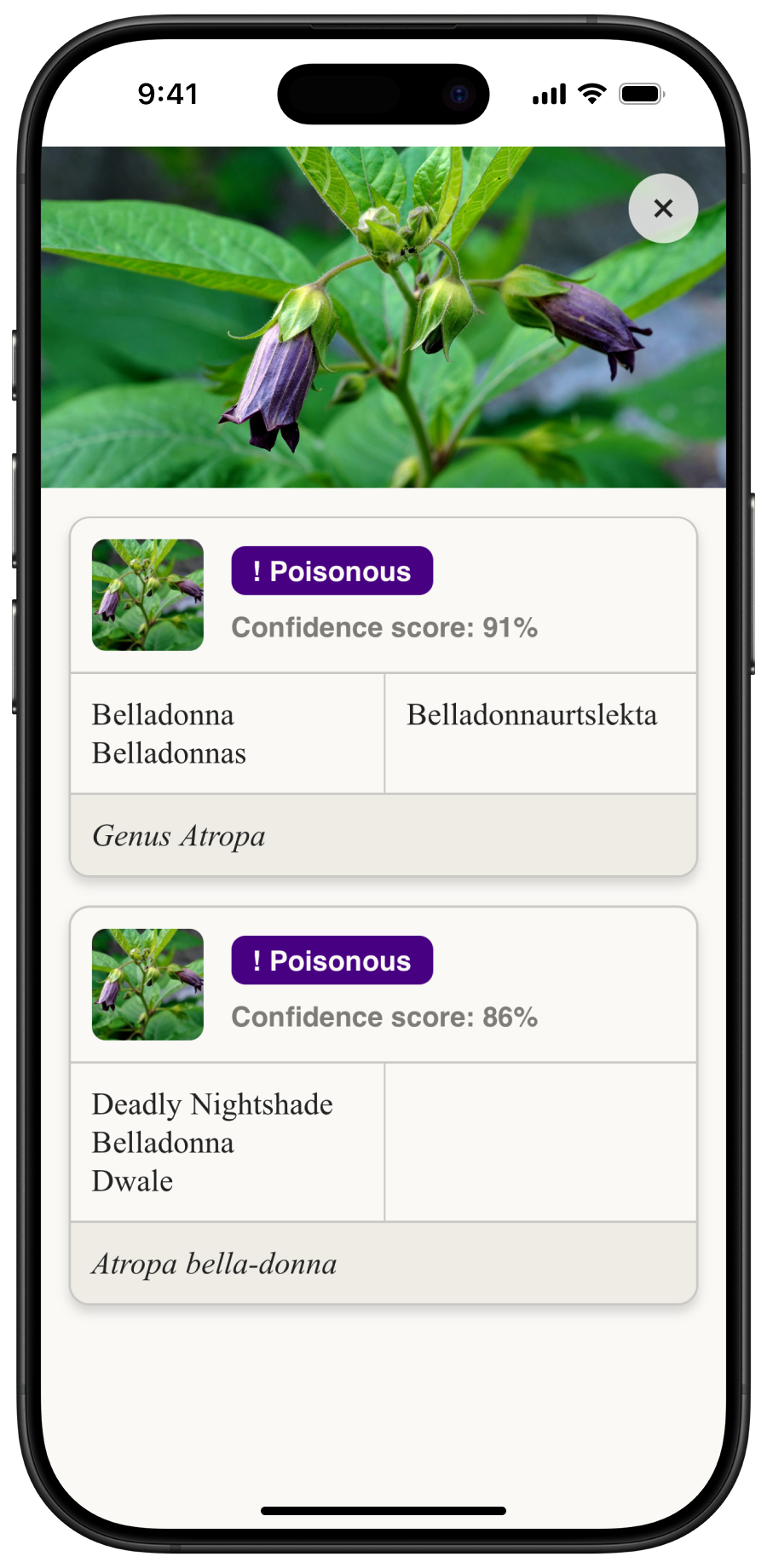
Introduction
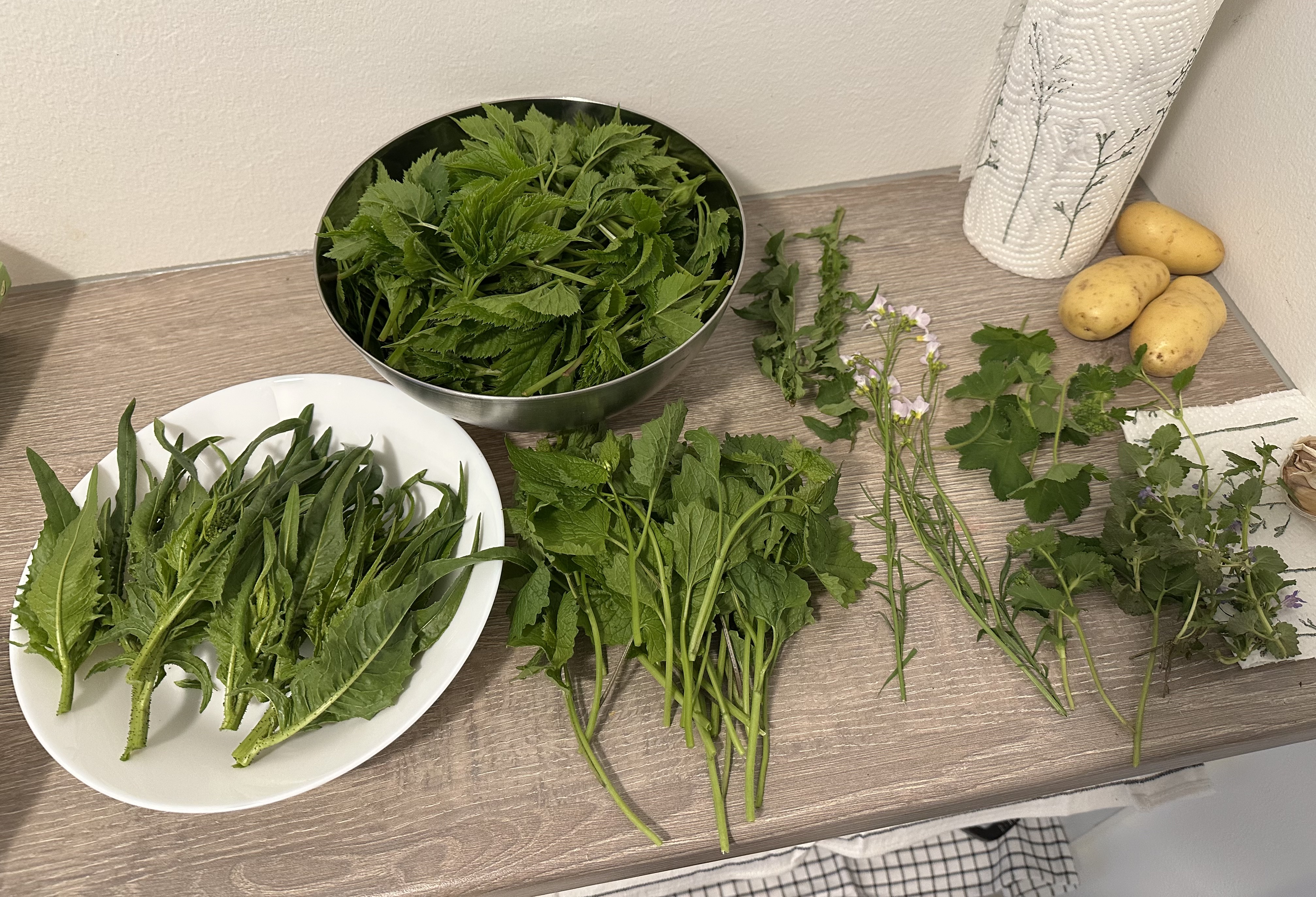
Fora began with my first nyttevekstvandring, a guided walk to discover edible wild plants. Having spent my whole life in cities, I knew very little about the plants around me. That walk opened my eyes to a world I had barely noticed and sparked a new interest in foraging. I wanted to keep exploring, but I wished I had a guide alongside me to help me understand what I was looking at and whether it was edible.
When I went out on my own, I found myself switching between a plant identification app and internet searches to learn about edibility, preparation, and precautions. What started as curiosity became a scattered search for answers. I wanted to bring those steps together in one place, making it easier for a beginner like me to learn about a plant while still out in the field.
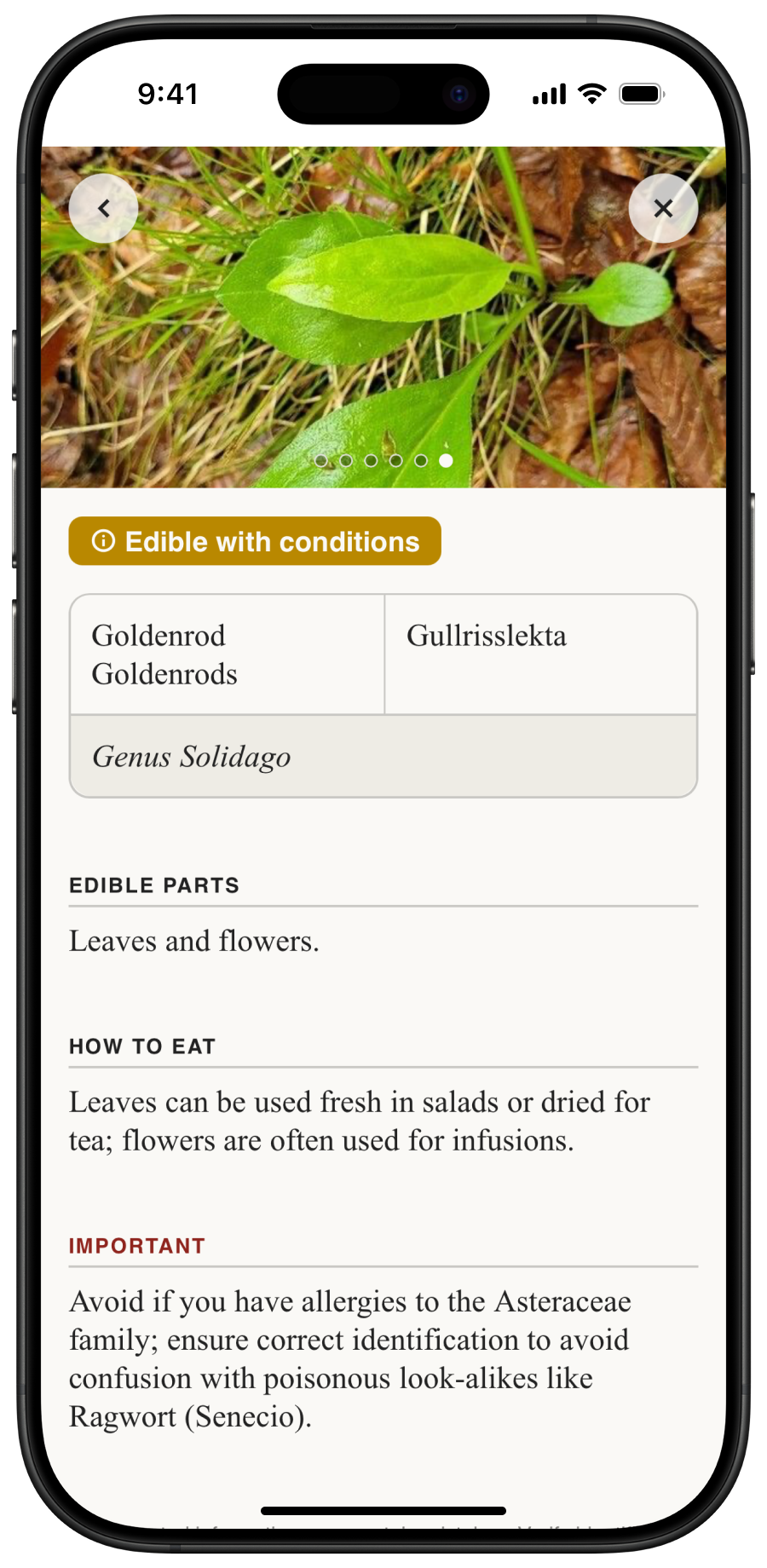
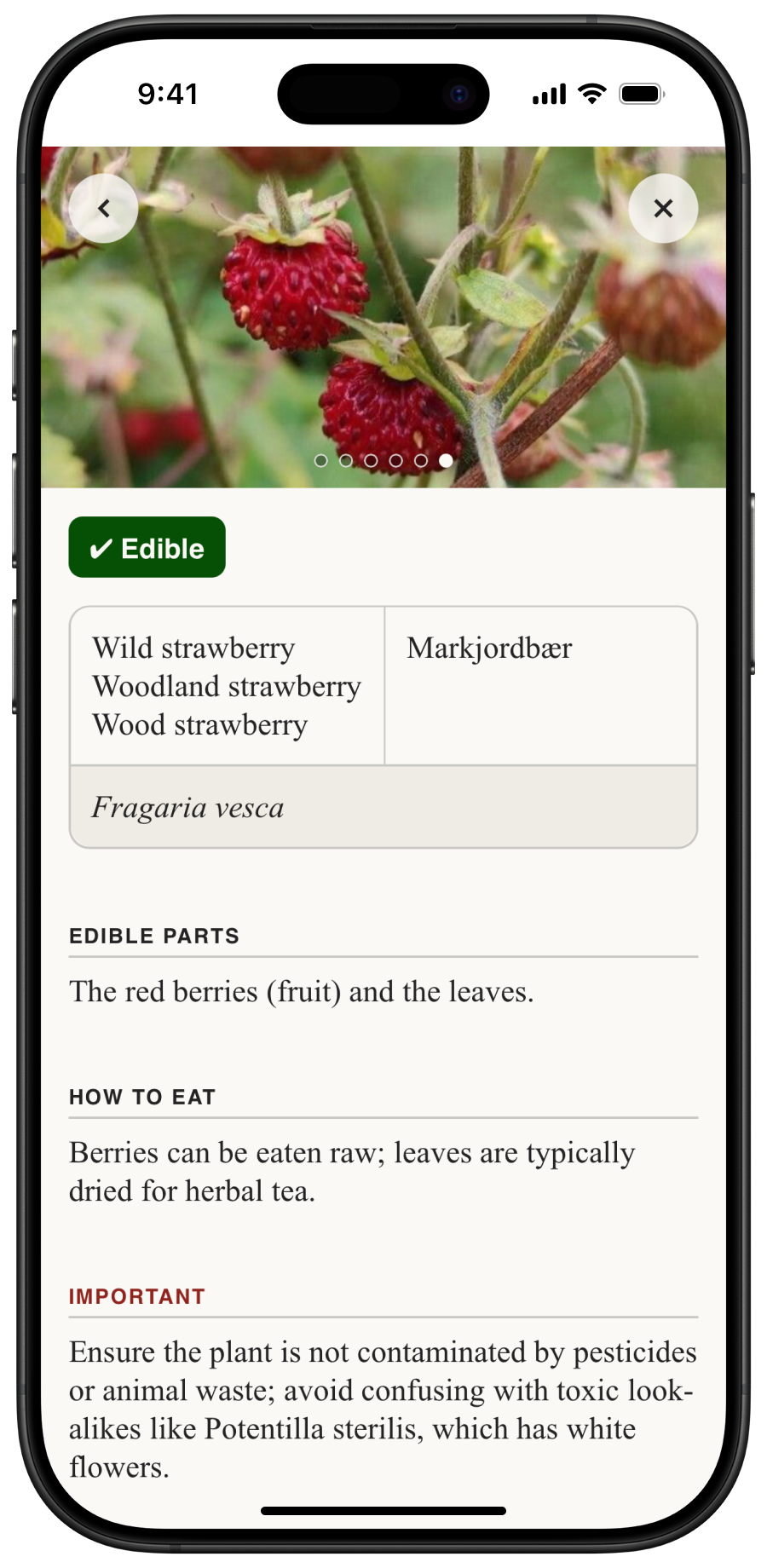
That idea became Fora. It uses the Pl@ntNet API for plant identification and Gemini AI to present information about edibility and considerations for consumption. My aim is to help new foragers build their knowledge and enjoy discovering the plants around them, with information that supports further learning and verification.
Ideate
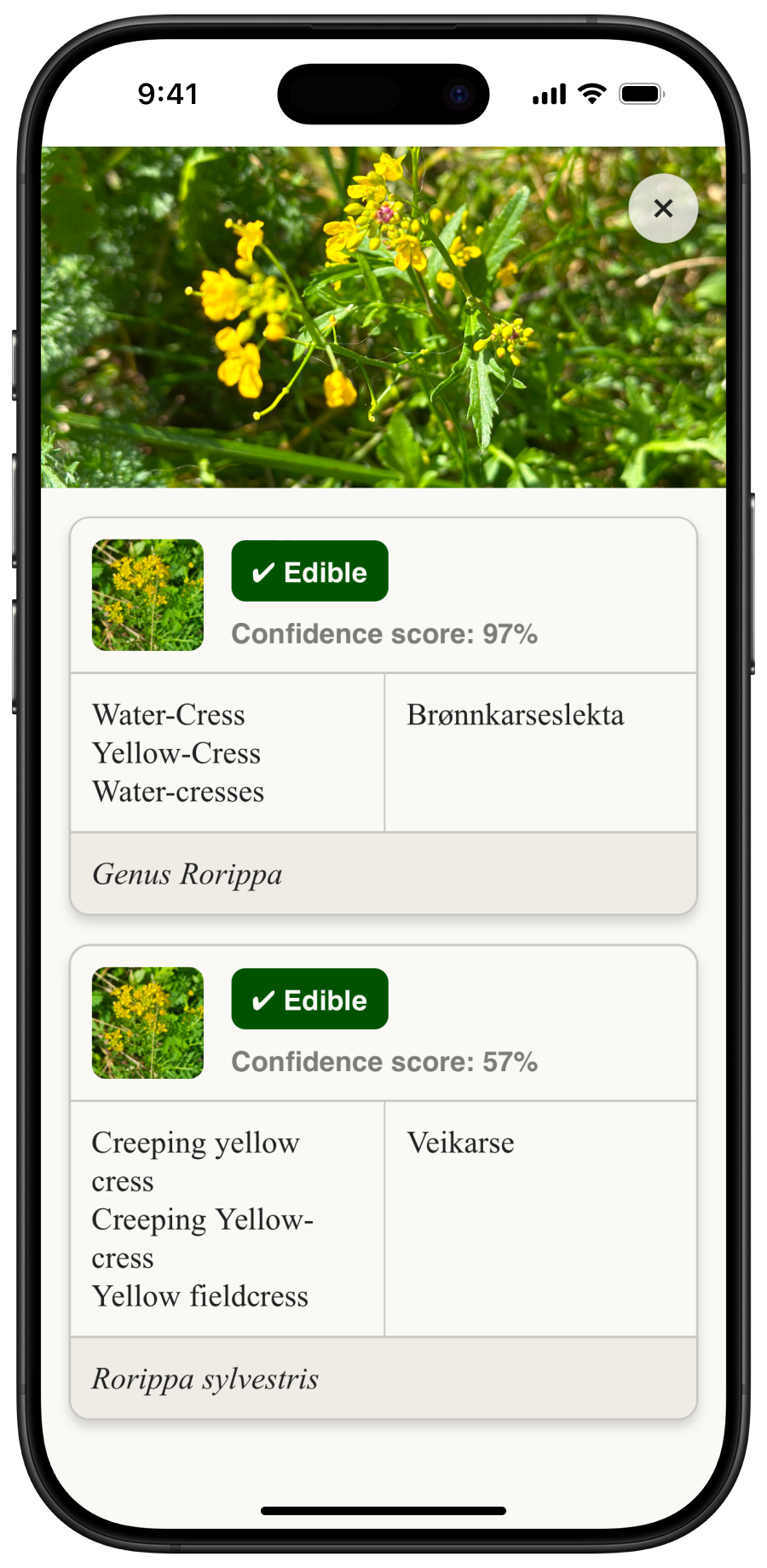
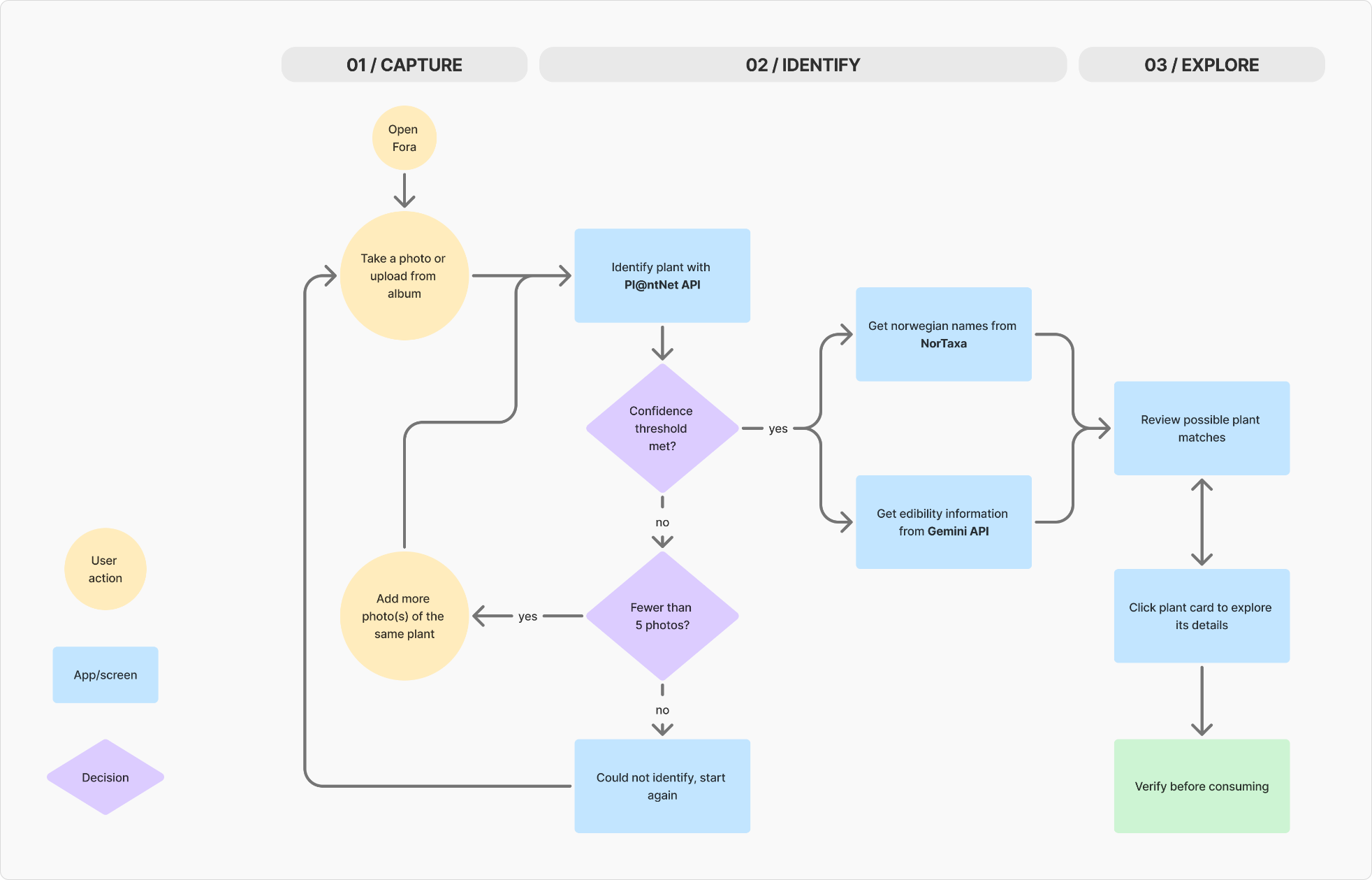
I focused on a simple question: how could I help a beginner from spotting an unfamiliar plant to learning about it and make decision to forage it, without switching between sources? I mapped out three steps: capture, identify, and explore. The flow brings plant matches and edibility information together, while giving users a way to add more photos when identification is uncertain. This helped me define the screens and decisions needed to keep the experience straightforward, with a reminder to verify before consuming.
Design
As a personal hobby project with a simple interface, Fora gave me room to design directly in code. I used Figma only for experimenting the layout of the plant card.

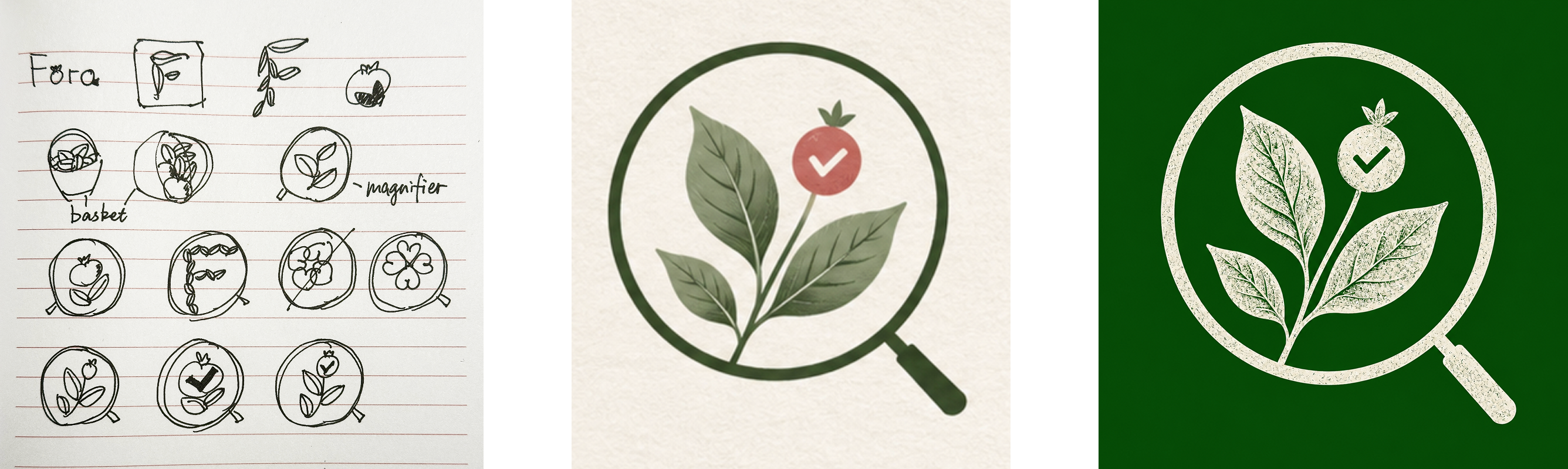
The logo started with sketches by hand. Once I had settled on a direction, I used GPT to create a digital version based on my original idea.
Technical Solutions & Key Challenges
I built Fora with TypeScript and Vite (before learning React and Next.js), separating screen components, API requests, and response mapping in a clear file structure. A central controller coordinates navigation and keeps captured photos available when users need to improve a match. I used TypeScript types and mapping functions to turn data from the three APIs into a consistent format for the interface.
Handling uncertain identification
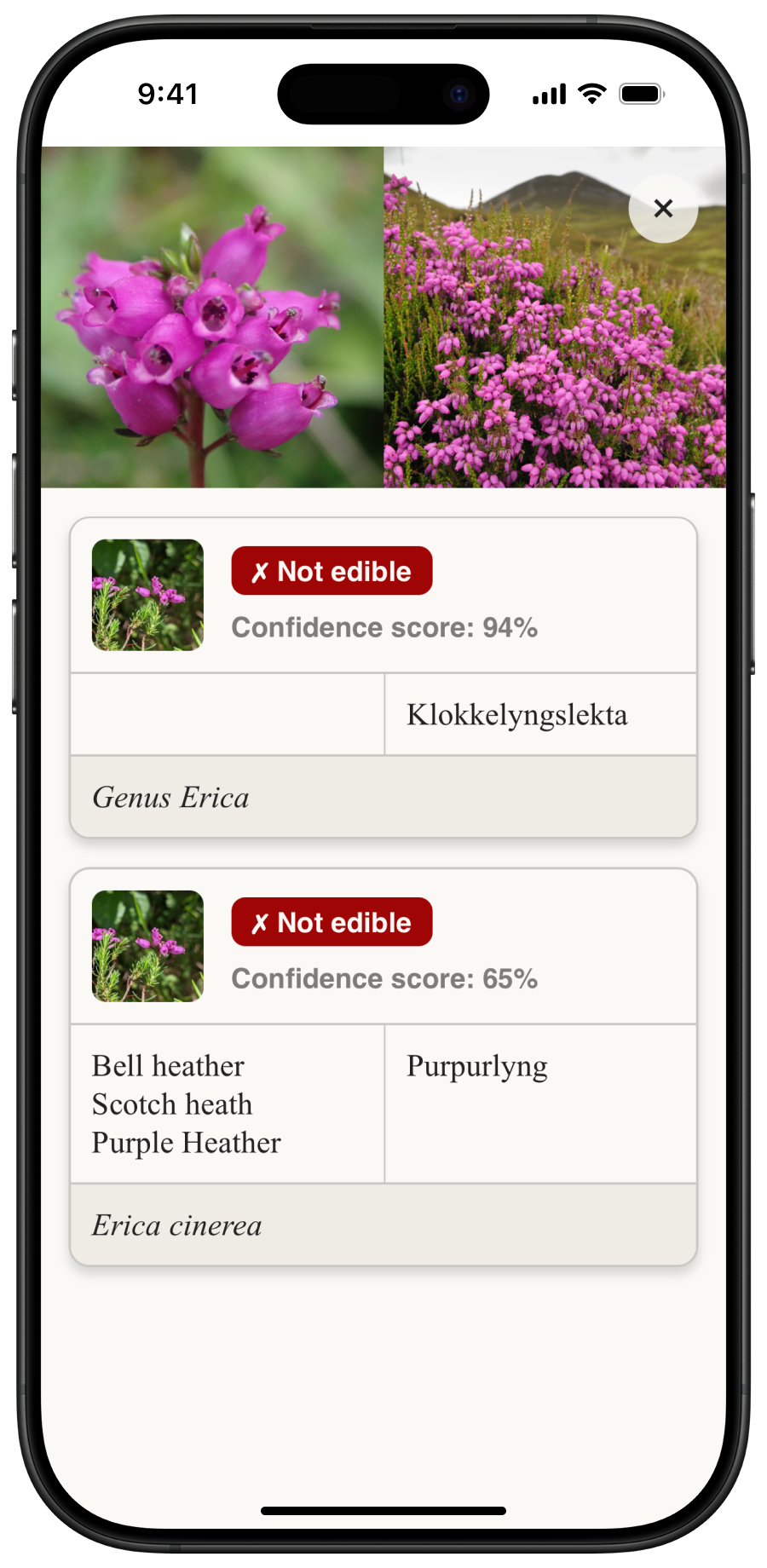
During MVP testing, I've found that a single photo does not always produce a match, so I set a 20% confidence threshold, Fora asks for another photo while preserving earlier images for the next request. This threshold controls the interface flow; it does not establish that a plant is safe to eat.
Reducing wait times
The results screen sometimes took 5 to 20 seconds to appear. To reduce the wait, I show plant candidates first, then load edibility information and Norwegian names at the same time. Each card updates as the information arrives.
Handling missing information
If edibility information cannot be loaded, the card shows “unknown.” If no Norwegian name is found, it still shows the scientific name. If the app cannot access the user's location, it searches Pl@ntNet's worldwide plant collection instead of a regional one.
Product Presentation
Watch Fora in action, from identifying a plant to exploring its edibility information.
Final Thoughts
- I experienced the full product cycle: identifying a pain point, defining the problem, designing, building, integrating APIs, deploying, and testing and iterating.
- Poor signal in the forest made offline access a clear priority for the next version.
- Working with LLMs taught me to question their accuracy. A curated database of local edible plants could provide a more reliable source for future versions.
- I set the MVP's identification confidence threshold at 20% to show more potential matches. This is a low threshold, not a safety rating, and needs further evaluation.
- A save feature would let me return to plants I've found and get to know local species over time.